Latex: Why Quality Matters
At GLYDE, we believe latex quality should never be treated as a detail. It is fundamental to what a condom is expected to be: reliable, consistent, and made to a high standard. For us, quality begins with natural rubber latex itself, but it also depends on how that latex is sourced, processed, and brought into the finished product.
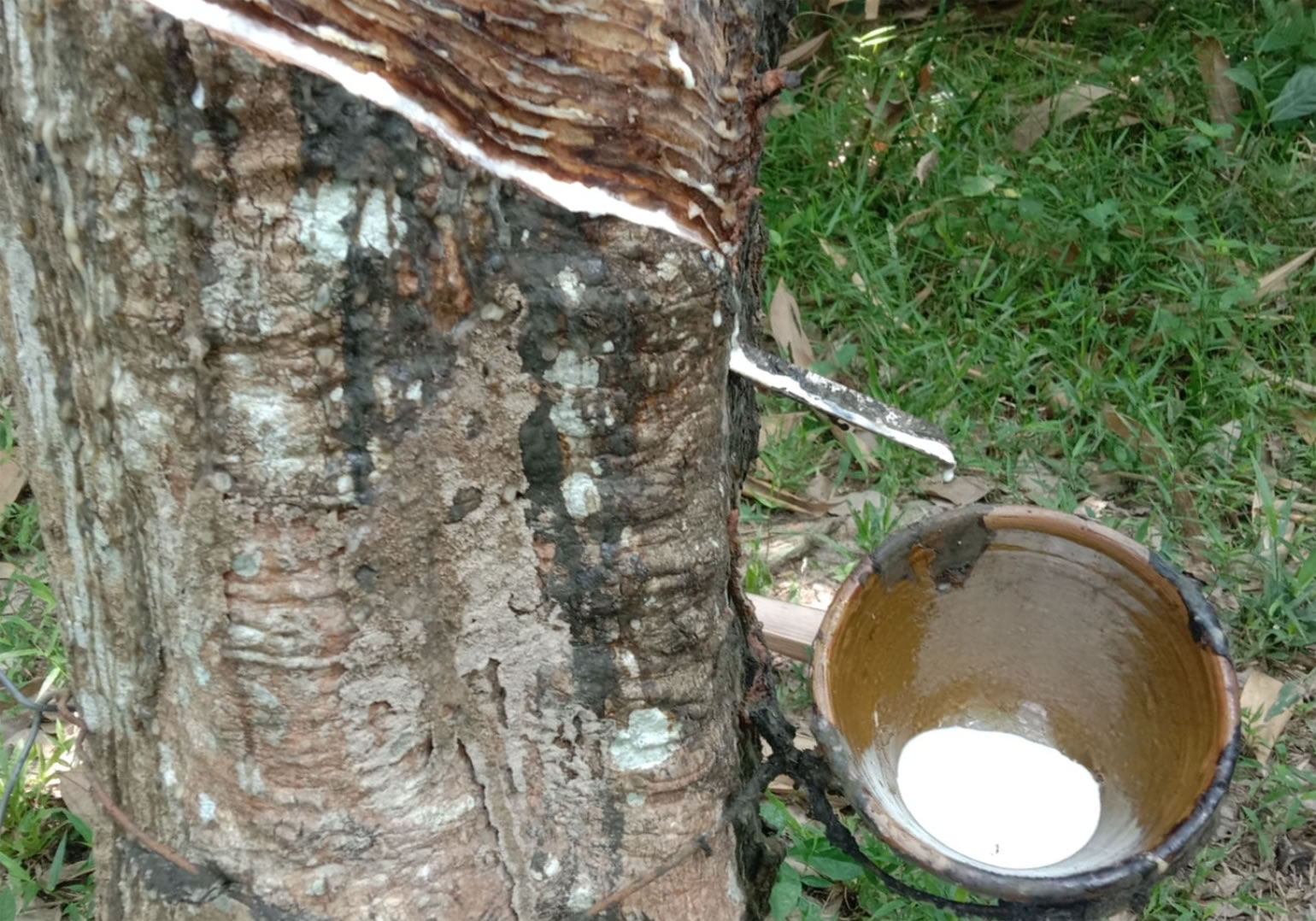 Latex agroforestry plantation in Thailand
For us, latex quality begins with a simple principle: a high-quality product depends on a high-quality material.
Natural rubber latex is not a uniform industrial input. It is a biological raw material, and that means it can vary. International guidance notes that latex quality may be influenced by plantation location, seasonal and climatic conditions, and the methods used to concentrate and prepare the latex for manufacturing. In a product category where consistency matters, that variability cannot be treated lightly.
That is why we do not think about latex in simplistic terms. “Natural” on its own is not enough. In our view, quality depends on the full picture: the suitability of the latex, the consistency of the concentrate, the way it is compounded, and the standards applied throughout production. ISO standards distinguish between requirements for natural rubber latex concentrate and the finished requirements and test methods for male natural rubber latex condoms, which underlines the point that quality has to be built from the raw material through to the finished product.
For us, this is where quality becomes more than a technical issue. It becomes a question of responsibility.
Latex should not only perform well. It should also come from a sourcing system that reflects care, transparency and long-term thinking. That is why the difference between regenerative rubber and standard latex matters. Conventional rubber supply chains are often shaped by monoculture production and commodity-driven sourcing. The Regenerative Rubber Initiative describes the wider problems associated with standard rubber systems as including deforestation, biodiversity loss, soil erosion, land-related risks, and pressure on farmers and workers across the supply chain. That does not mean every standard source is identical. But it does mean that origin and sourcing model matter in ways the industry can no longer ignore.

Latex agroforestry plantation in Thailand
By contrast, regenerative rubber points to a different direction. The Regenerative Rubber Initiative describes a model based on agroforestry, direct sourcing, traceability, premium payments, and cultivation without agrochemicals or middlemen. In practical terms, that means the conversation around latex changes: it is no longer only about commodity supply, but about how rubber is grown, how land is managed, and how value is shared through the chain. For us, that distinction is meaningful because it connects two forms of quality that belong together.
The first is material and manufacturing quality. A condom must meet high expectations in terms of consistency, control and performance, and that depends on the quality of the latex and the discipline of the production process. WHO and UNFPA procurement guidance makes that link explicit by pointing to raw-material control, process adequacy, vendor validation and quality assurance as critical parts of condom manufacturing.
The second is source quality. We believe it matters whether latex comes from an anonymous commodity system or from a more traceable and regenerative agricultural model. For us, the story of latex should include not only how it performs in production, but how it was grown in the first place. This view is increasingly supported by research. The Regenerative Rubber Initiative highlights Thai agroforestry research showing that rubber agroforestry can deliver biodiversity benefits without reducing yields. More recent peer-reviewed research has also found that several rubber-based agroforestry systems can improve soil nutrient levels and enzyme activity relative to rubber monoculture, while some intercropping systems reduced soil greenhouse-gas impacts and global warming potential. A separate 2025 life-cycle assessment of natural rubber in Thailand found that the raw-material supply stage - especially plantation activity and land-use change - dominates environmental impact far more than later manufacturing stages. Taken together, these findings reinforce a clear point: if we want better latex, we have to care about the system behind the raw material, not only the factory that uses it.
At GLYDE, that is how we think about latex quality.
We care about performance, because reliability matters. We care about consistency, because manufacturing discipline matters. And we care about sourcing, because responsibility matters too.
For us, quality is not only about how latex behaves in production. It is also about how it is grown, how it is sourced, and what kind of system stands behind it. That is why latex quality matters to us.